Some manga I've read, that particularly made me feel something, to the point that I wanted to write about them. Quirky comics tend to make me feel stuff. Basically just some random musings, mostly taken from my anime-planet.com "reviews". See it as a list of recommendations (or the opposite) if you're looking for something to read, maybe.
Ashizuri Suizokukan (Panpanya)
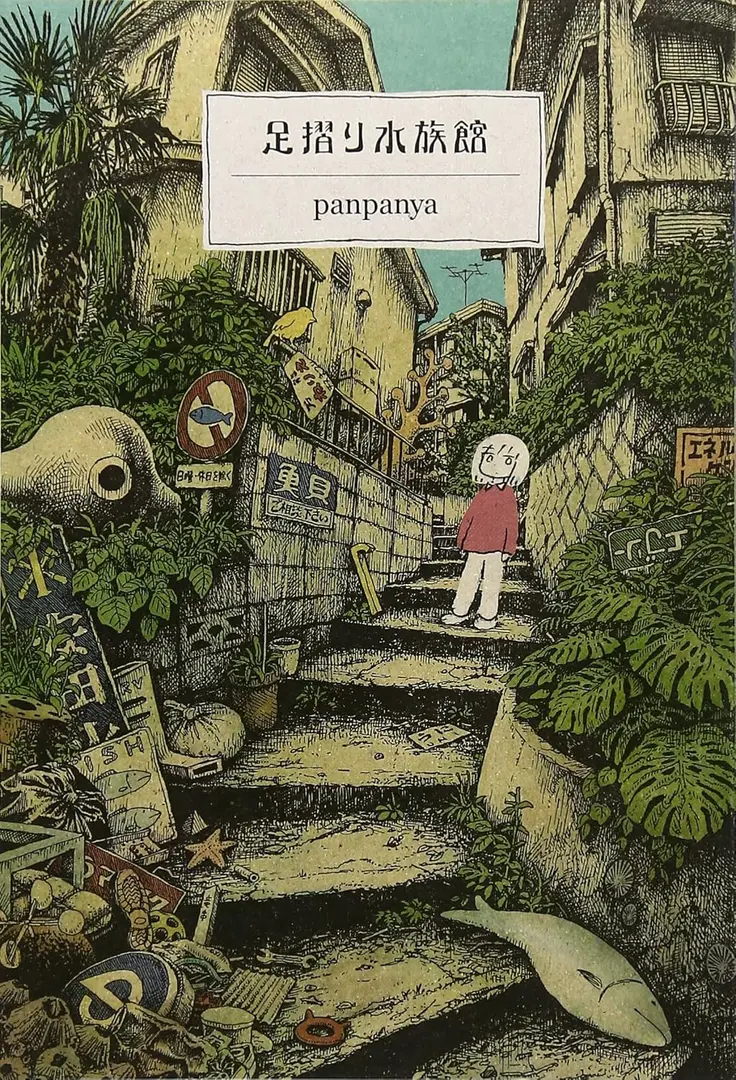 I was really eager to read something by Panpanya, just based on how it looks. Now that I have, I'm not sure if I like it or not. To me, it feels like an art project more than anything else. And like watching an art exhibition, I wish I had a guide there to give me the context, because I'm not privy to it. What's the meaning of this manga? What is it trying to convey? Who knows.
But this is what I'm getting: The feeling of being a child. The feeling of not understanding, but going with it anyway. The world depicted here is rendered in extreme detail, dense, dark, physical and close. It towers above you, hinting at its secrets, but not giving them up. You live in the world, but it's not for you to understand yet. In contrast, the protagonist is small and extremely simple looking, often in pencil compared to the black inks of the world.
The art really is striking, at least in most of the stories, with the contrast between backgrounds and characters taken to the extreme. Very appealing!
As for the actual stories; one of them is described as being a dream, the others feel no different from that one. Many are centered around fish. My favorite is ”The City of the Dead”, which starts out as a fairly normal account of a visit to France, and then turns increasingly strange.
I was really eager to read something by Panpanya, just based on how it looks. Now that I have, I'm not sure if I like it or not. To me, it feels like an art project more than anything else. And like watching an art exhibition, I wish I had a guide there to give me the context, because I'm not privy to it. What's the meaning of this manga? What is it trying to convey? Who knows.
But this is what I'm getting: The feeling of being a child. The feeling of not understanding, but going with it anyway. The world depicted here is rendered in extreme detail, dense, dark, physical and close. It towers above you, hinting at its secrets, but not giving them up. You live in the world, but it's not for you to understand yet. In contrast, the protagonist is small and extremely simple looking, often in pencil compared to the black inks of the world.
The art really is striking, at least in most of the stories, with the contrast between backgrounds and characters taken to the extreme. Very appealing!
As for the actual stories; one of them is described as being a dream, the others feel no different from that one. Many are centered around fish. My favorite is ”The City of the Dead”, which starts out as a fairly normal account of a visit to France, and then turns increasingly strange.
Break of Dawn (Tetsuya Imai)
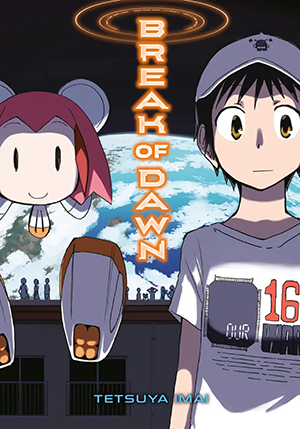 A good enough read, even if it didn't quite live up to the promise of its premise. It's a bit long winded, and for a story centered on robotic intelligence and beings from outer space, there's a whole lot of... just kids having arguments. But the story is well tied together, characters grow and change in interesting ways, and it's never hard to follow.
This manga suffers badly from same-face syndrome. ALL the characters, boys and girls, kids, parents and teachers, have the same face. It doesn't get too confusing though, just a little ridiculous.
A good enough read, even if it didn't quite live up to the promise of its premise. It's a bit long winded, and for a story centered on robotic intelligence and beings from outer space, there's a whole lot of... just kids having arguments. But the story is well tied together, characters grow and change in interesting ways, and it's never hard to follow.
This manga suffers badly from same-face syndrome. ALL the characters, boys and girls, kids, parents and teachers, have the same face. It doesn't get too confusing though, just a little ridiculous.
Cesare (Fuyumi Souryo)
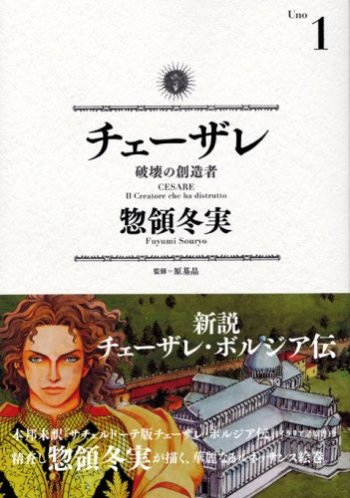 Something really special: A manga about on Italian renaissance politics, culminating in the election of a pope in 1492. And it's great!
Expect lots of eloquent language, gentlemen in extravagant costumes conversing or scheming in luxurious chambers, political and religious discourse, and subtle twists rather than big gestures.
The pacing is slow, and to be fair, sometimes the politics get a little overwhelming. In the latter parts of the story, there were points where I almost lost the plot, but then again, the good parts are REALLY good. It's sharply written, well researched, and the art is gorgeous.
Most of the characters here are real historical figures, including the titular Cesare Borgia, so Wikipedia could spoil you big time! The fictional protagonist Angelo is a great addition though, a young and sheltered man not well versed in the intricacies of the world around him, and so he asks all the questions on behalf of the reader.
Having previously read Mars, I find it even more fascinating that Fuyumi Souryo is the one behind this manga. The transition from a traditional shoujo love story to this is… puzzling. But also amazing.
I think my favorite character is Giovanni de Medici, one of Angelo's fellow students. He is introduced as a proud and aloof man, whose passive-aggressive behavior towards Angelo is what kicks off Angelo's and Cesare's friendship in the first place. Later on, he turns into, for lack of a better description, a big teddy bear, who is insecure and easily upset, but with a heart of gold, and by far the cutest and most huggable character in the entire manga. A little jarring, but he's so cuddly that I'll allow it.
Something really special: A manga about on Italian renaissance politics, culminating in the election of a pope in 1492. And it's great!
Expect lots of eloquent language, gentlemen in extravagant costumes conversing or scheming in luxurious chambers, political and religious discourse, and subtle twists rather than big gestures.
The pacing is slow, and to be fair, sometimes the politics get a little overwhelming. In the latter parts of the story, there were points where I almost lost the plot, but then again, the good parts are REALLY good. It's sharply written, well researched, and the art is gorgeous.
Most of the characters here are real historical figures, including the titular Cesare Borgia, so Wikipedia could spoil you big time! The fictional protagonist Angelo is a great addition though, a young and sheltered man not well versed in the intricacies of the world around him, and so he asks all the questions on behalf of the reader.
Having previously read Mars, I find it even more fascinating that Fuyumi Souryo is the one behind this manga. The transition from a traditional shoujo love story to this is… puzzling. But also amazing.
I think my favorite character is Giovanni de Medici, one of Angelo's fellow students. He is introduced as a proud and aloof man, whose passive-aggressive behavior towards Angelo is what kicks off Angelo's and Cesare's friendship in the first place. Later on, he turns into, for lack of a better description, a big teddy bear, who is insecure and easily upset, but with a heart of gold, and by far the cutest and most huggable character in the entire manga. A little jarring, but he's so cuddly that I'll allow it.
FLCL (Hajime Ueda)
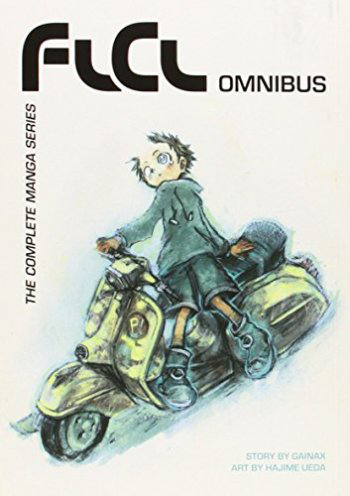 Went into this without prior knowledge of the anime, and... I didn't understand anything. Half of the time I didn't get why the characters were doing what they were doing, the other half I couldn't figure out what was even happening because the storytelling was so bad. Maybe you need to have seen the anime to make sense of this. I read about 80% before I gave up. I couldn't take anymore. One of the worst manga I've read.
I guess the art looks cool in itself though, in a street art sort of way. But it doesn't convey the story well.
Went into this without prior knowledge of the anime, and... I didn't understand anything. Half of the time I didn't get why the characters were doing what they were doing, the other half I couldn't figure out what was even happening because the storytelling was so bad. Maybe you need to have seen the anime to make sense of this. I read about 80% before I gave up. I couldn't take anymore. One of the worst manga I've read.
I guess the art looks cool in itself though, in a street art sort of way. But it doesn't convey the story well.
The Girl From the Other Side: Siúil, a Rún (Nagabe)
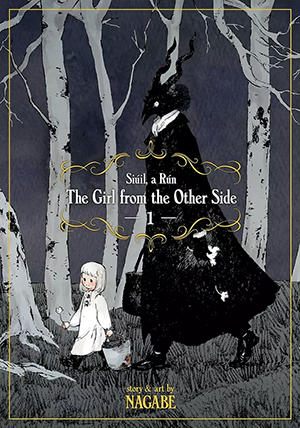 Lovely, cute and spooky. A dark fantasy tale with focus on the small things, like the daily lives of the main characters. It has its own voice, aestetic and pacing, quite unlike anything else I've read. Was lucky enough to be able to pick up the deluxe edition, four heavy hardcover volumes with gold on the cover, and and I have to say the manga is well deserving of that kind of presentation. The entire package really comes together well.
I will say though, that the complex mythology threw me for a loop towards the end, and I had to put down the book and think for a while about how different plot points actually fit together. I think it does but I'm not entirely sure even now.
Also, depending on who you are as a reader, the ending might feel amazing or a bit lacking, as it wraps up some things but maybe not others.
Lovely, cute and spooky. A dark fantasy tale with focus on the small things, like the daily lives of the main characters. It has its own voice, aestetic and pacing, quite unlike anything else I've read. Was lucky enough to be able to pick up the deluxe edition, four heavy hardcover volumes with gold on the cover, and and I have to say the manga is well deserving of that kind of presentation. The entire package really comes together well.
I will say though, that the complex mythology threw me for a loop towards the end, and I had to put down the book and think for a while about how different plot points actually fit together. I think it does but I'm not entirely sure even now.
Also, depending on who you are as a reader, the ending might feel amazing or a bit lacking, as it wraps up some things but maybe not others.
The Guy She Was Interested in Wasn't a Guy at All (Sumiko Arai)
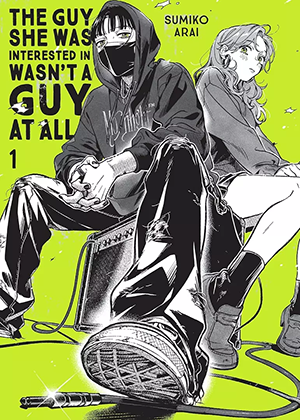 After two volumes, I do not understand the hype.
Having first been posted on Twitter, apparently, the story is chopped up into really tiny chunks consisting of just a few pages, like micro-chapters within the regular chapters. This really disrupts the flow when read in book format, since scenes just start and stop every few pages, without melding together into a well told story. Sometimes the last few panels of one micro-chapter even repeats at the start of the next, on the very next page.
The artwork IS really good, with very nicely rendered characters and good expressions. The green on the pages is stylish, and all in all, it looks cool. But it looks cool in the way an anime poster, or an album cover, does. It's the kind of thing that would look amazing framed on the wall. When actually reading the manga, in my eyes, the aesthetics kind of get in the way. Crazy page layouts, lots of closeups, very little background work and all that bright green makes it hard to read. And that is unforgivable in a comic, in my opinion.
The story itself, under the choppiness and stylish surface, isn't bad, but it's nothing that really stands out either. The theme of bonding over music subculture certainly fits the package, though.
After two volumes, I do not understand the hype.
Having first been posted on Twitter, apparently, the story is chopped up into really tiny chunks consisting of just a few pages, like micro-chapters within the regular chapters. This really disrupts the flow when read in book format, since scenes just start and stop every few pages, without melding together into a well told story. Sometimes the last few panels of one micro-chapter even repeats at the start of the next, on the very next page.
The artwork IS really good, with very nicely rendered characters and good expressions. The green on the pages is stylish, and all in all, it looks cool. But it looks cool in the way an anime poster, or an album cover, does. It's the kind of thing that would look amazing framed on the wall. When actually reading the manga, in my eyes, the aesthetics kind of get in the way. Crazy page layouts, lots of closeups, very little background work and all that bright green makes it hard to read. And that is unforgivable in a comic, in my opinion.
The story itself, under the choppiness and stylish surface, isn't bad, but it's nothing that really stands out either. The theme of bonding over music subculture certainly fits the package, though.
Majime na Jikan (Yukiko Seike)
 A high-school girl gets hit by a car and dies. She lingers as a ghost and observes how the people around her grieve and move on.
A fantastic look at death, both from the viewpoint of the ones dying and the ones left behind. It has all the emotional weight that the subject matter requires, and just enough levity to keep it from being too much. I did get goosebumps and tears in my eyes at the end. Two volumes, perfect length, beautiful ending. Wonderfully done.
A high-school girl gets hit by a car and dies. She lingers as a ghost and observes how the people around her grieve and move on.
A fantastic look at death, both from the viewpoint of the ones dying and the ones left behind. It has all the emotional weight that the subject matter requires, and just enough levity to keep it from being too much. I did get goosebumps and tears in my eyes at the end. Two volumes, perfect length, beautiful ending. Wonderfully done.
Mokke (Takatoshi Kumakura)
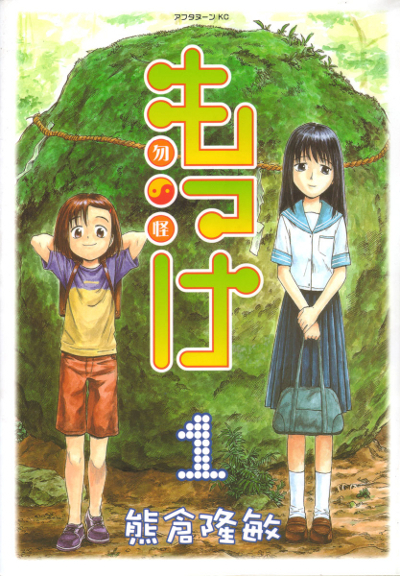 This is pretty good! It's a story about two sisters with supernatural abilities, one who can see spirits (Shizuru), and one who is easily possessed by them (Mizuki).
It has kind of a ”monster of the week” approach, where each chapter focuses on a different spirit from japanese folklore. Some of them I had heard of before, like the kamaitachi and the kudan, but most were new to me. A pretty cool way to learn about them, I think.
The art is good and the setting and subject matter makes for great atmosphere. Where it falls a little short is in the overall plot. For a long while, it just disconnected chapters with different spirits jumping onto poor Mizuki, who can never catch a break. I really wanted to know more about the side characters, like the (very cool) grandfather, or the parents or classmates, or to just have something bigger build up over several chapters. Then, in the second half, I somewhat get my wish when Shizuru starts highschool and things are shaken up a bit. The ending is mostly satisfying.
There's some hints of fanservice that I really could have lived without, considering the age of the protagonists. It is pretty mild though, just some uncalled for dropping of pants and stuff like that.
This is pretty good! It's a story about two sisters with supernatural abilities, one who can see spirits (Shizuru), and one who is easily possessed by them (Mizuki).
It has kind of a ”monster of the week” approach, where each chapter focuses on a different spirit from japanese folklore. Some of them I had heard of before, like the kamaitachi and the kudan, but most were new to me. A pretty cool way to learn about them, I think.
The art is good and the setting and subject matter makes for great atmosphere. Where it falls a little short is in the overall plot. For a long while, it just disconnected chapters with different spirits jumping onto poor Mizuki, who can never catch a break. I really wanted to know more about the side characters, like the (very cool) grandfather, or the parents or classmates, or to just have something bigger build up over several chapters. Then, in the second half, I somewhat get my wish when Shizuru starts highschool and things are shaken up a bit. The ending is mostly satisfying.
There's some hints of fanservice that I really could have lived without, considering the age of the protagonists. It is pretty mild though, just some uncalled for dropping of pants and stuff like that.
They Were 11! (Moto Hagio)
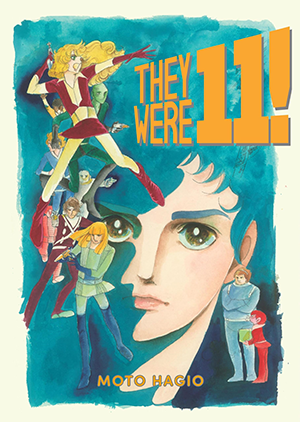 It can be quite refreshing to read an old fashioned story sometimes, that is not bogged down by decades of genre tropes, or is trying to be twisty, or shocking, or self aware. In that way, I quite enjoyed They Were Eleven. Engaging, fairly short, self contained, and to the point. The mystery: Who is the eleventh passanger? The mission: Surviving a derelict and broken ship for 53 days.
But then there's the character Frol, who is arguably the focus of the story. While having a character who is neither male nor female could be considered progressive, the way it's depicted, and discussed in universe by the characters, it doesn't come across that way, to me, reading this in the 2020s.
In 1970s Japan, being a woman came with a lot of assumptions about your character and role, and those assumptions are apparently considered universal enough to apply even hunderds of years in the future and for different species on other planets. Of course Frol wants to become a man eventually, because men are bigger and stronger and cooler and more powerful.
Frol ”hates women”, while being depicted with several typical ”female” coded traits, like being easily scared, physically weak, a blabbermouth, and very emotional. And while looking very much like a woman. And of course, they are the one who needs to be saved in the end too, several times. Frol dreaming of becoming a man reads like a kind of joke throughout the story, but I don't know how it is meant. I can't figure out what I'm supposed to think about them as I read, and the ending doesn't help with that either.
There's also a sequel called "They Were Eleven!: Horizon of the East, Eternity of the West", in the same volume by Denpa Books. That one is a more refined story for sure, but also with less of a hook and immediate tension, focusing on political intrigue and a looming war between Aritoska Rey and Aritoska Rah, the characters King and Fourth's respective planets. Reading both stories back to back, the art is noticably improved here, and this one is also longer.
This story is mostly about King and the political figures around him, and Tada and Frol, who is drawn into the plot by being King's friends. They function kind of like a Tintin/captain Haddock pair here. The gender issues of Frol are greatly toned down, for better or worse.
It can be quite refreshing to read an old fashioned story sometimes, that is not bogged down by decades of genre tropes, or is trying to be twisty, or shocking, or self aware. In that way, I quite enjoyed They Were Eleven. Engaging, fairly short, self contained, and to the point. The mystery: Who is the eleventh passanger? The mission: Surviving a derelict and broken ship for 53 days.
But then there's the character Frol, who is arguably the focus of the story. While having a character who is neither male nor female could be considered progressive, the way it's depicted, and discussed in universe by the characters, it doesn't come across that way, to me, reading this in the 2020s.
In 1970s Japan, being a woman came with a lot of assumptions about your character and role, and those assumptions are apparently considered universal enough to apply even hunderds of years in the future and for different species on other planets. Of course Frol wants to become a man eventually, because men are bigger and stronger and cooler and more powerful.
Frol ”hates women”, while being depicted with several typical ”female” coded traits, like being easily scared, physically weak, a blabbermouth, and very emotional. And while looking very much like a woman. And of course, they are the one who needs to be saved in the end too, several times. Frol dreaming of becoming a man reads like a kind of joke throughout the story, but I don't know how it is meant. I can't figure out what I'm supposed to think about them as I read, and the ending doesn't help with that either.
There's also a sequel called "They Were Eleven!: Horizon of the East, Eternity of the West", in the same volume by Denpa Books. That one is a more refined story for sure, but also with less of a hook and immediate tension, focusing on political intrigue and a looming war between Aritoska Rey and Aritoska Rah, the characters King and Fourth's respective planets. Reading both stories back to back, the art is noticably improved here, and this one is also longer.
This story is mostly about King and the political figures around him, and Tada and Frol, who is drawn into the plot by being King's friends. They function kind of like a Tintin/captain Haddock pair here. The gender issues of Frol are greatly toned down, for better or worse.
Yokohama Kaidashi Kikou (Hitoshi Ashinano)
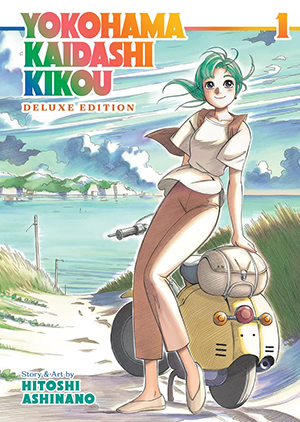 An android runs a café in a post apocalyptic Japan. Days and years go by. And thats it. That is everything.
Talk about being greater than the sum of its parts. The way Ashinano invokes complex emotions from subtle details, and keeps the reader engaged and invested while nothing much happens, is pure magic. There are so many feelings and such a sense of wonder put down into this manga that it boggles the mind. This is as close as I think I will ever get to a perfect work of art, and I don't say that lightly.
An android runs a café in a post apocalyptic Japan. Days and years go by. And thats it. That is everything.
Talk about being greater than the sum of its parts. The way Ashinano invokes complex emotions from subtle details, and keeps the reader engaged and invested while nothing much happens, is pure magic. There are so many feelings and such a sense of wonder put down into this manga that it boggles the mind. This is as close as I think I will ever get to a perfect work of art, and I don't say that lightly.
Yuugai Muzai Gangu (Ura Shino)
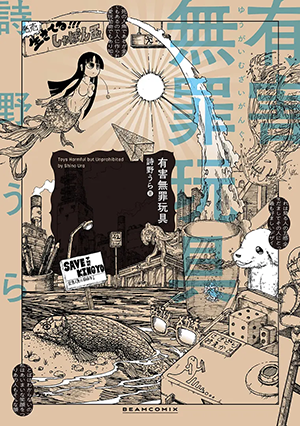 I'm going to be honest and say that my first thought was that this looks like a 14-year old western kid's attempt at making manga. Just a few pages in, though, I realized that it is something else entirely.
It may look amateurish at first glance but don't be fooled. This is some really profound, existential, mind-bending stuff. Each self-contained chapter is like musings on things like the nature of the self, eternity and immortality, and it's really, really good.
The art also is more intricate than it seems at first. The visual storytelling is quite masterful, and the drawings improve a bit towards the end, too. Not that I even cared at that point.
Recommended!
I'm going to be honest and say that my first thought was that this looks like a 14-year old western kid's attempt at making manga. Just a few pages in, though, I realized that it is something else entirely.
It may look amateurish at first glance but don't be fooled. This is some really profound, existential, mind-bending stuff. Each self-contained chapter is like musings on things like the nature of the self, eternity and immortality, and it's really, really good.
The art also is more intricate than it seems at first. The visual storytelling is quite masterful, and the drawings improve a bit towards the end, too. Not that I even cared at that point.
Recommended!